Showing posts with label documentary. Show all posts

Monday, September 14, 2015

"F for Fake" Review

"F for Fake" is one of the most interesting films I've personally seen. It's also one of the most difficult to describe. It's a film, but it's also a documentary, and yet it's also been described as a film essay. It is purely original, and ironically about tricking others into thinking you are original. Orson Welles has crafted a film unlike any other, and he knows it.

'F for Fake" tells the story of Elmyr de Hory, a famous art forger of the 1960's and 70's. His art was so close to the originals that it even fooled the artist themselves. At the same time, there's Clifford Irving, the biographer of Hory and of famed introverted socialite Howard Hughes, or was he? Yet Hughes is also a historic fraud, and what about self proclaimed charlatan Orson Welles, how is he connected to the story?

Describing "F for Fake" is like listening to child after seeing an exciting summer blockbuster, they want to describe every single detail, but there are too many threads to keep up with. So they'll go back and describe an earlier event and then eventually get back to the point. Eventually, you will get lost and assume the story is something crazy and impossible to understand.

Then, you actually see the film, and it all makes sense. The movie deals with individual stories that are all interesting enough to have their own hour and a half film. Yet, they are all used here in tandem with one another in just under 90 minutes.

The key to making all these threads make sense is Welles' editing of the film. He connects the stories not by a timeline of events but rather through ideas and themes. If Hory talks about why his skill is evident through his ability to copy others, the film may cut to a scene of Irving countering this point. They may even have a conversation through this editing, their individual points creating a dialogue that was filmed years apart but made evident through the power of film.
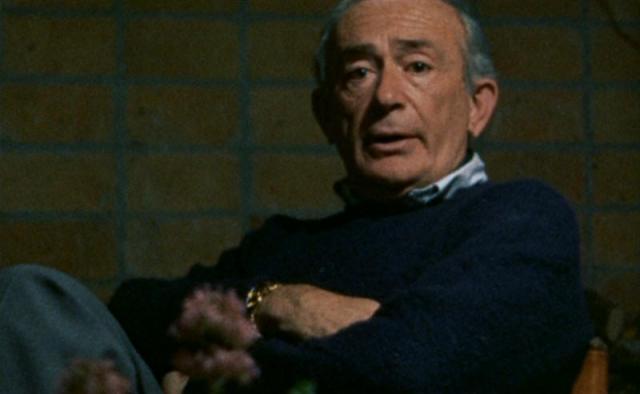
 This editing style is why many of called "F for Fake" a film essay. It jumps from story to story, flowing as a well written essay would. Welles states the thesis from the start: "This is a film about trickery, fraud, about lies.", and then proceeds to support it with documentary footage, anecdotes, tangents, and a bit of trustworthy comedy. 

Enough credit cannot be given to Orson Welles. Filling most of the required cast and crew, including one of the staring roles, "F for Fake" is Welles' film. While his editing has been discussed, his personality comes out in his narration, which serves to make the connections even easier to understand. The narration even adds a bit of fun and comedy to the film, with Welles pointing out ironic coincidences and even making fun of himself and the "players" in his film.

I'm at a loss for what else to say. Half of the fun of "F for Fake"is not knowing about it, going in blind as to how it will all play out. It is a film unlike any other, plain and simple. If you want to see something original, funny, powerful, and expertly crafted, then Orson Welles' "F for Fake" should be next on your list of must sees.

If my words have not convinced you, then please watch this analysis of film editing from "Every Frame a Painting", who uses "F for Fake" a case study for expert editing.


Saturday, July 25, 2015

Amy (2015) Review


  Documentaries are an interesting genre of film. If done correctly, they can make any subject interesting and can entertain while informing the viewing. If done incorrectly, they can support the stereotype that documentaries are boring and inaccessible. Director Asif Kapadia proved the former with his film “Senna” about world famous Formula 1 racer Ayrton Senna whose tragic death changed the safety rules of the sport. The film itself is able to draw in the viewer with this man’s story, even if they have no interest in racing, such as myself. It is a fantastic film and one that I suggest to everyone, which you can watch on Netflix right now.
               
  Recently, I found out about the documentary “Amy”, which focuses on the career of Amy Winehouse and is directed by the same man. Not only am I a fan of “Senna” but I’m also a fan of Winehouse herself. She was one of the first musicians I ever listened to extensively, buying all three of her albums and learning the words to many of the songs. Yet, I started listening to her about a year after her death, so I didn’t get to experience the tragedy of a fan seeing their idol pass away. The want to know her story and the talent behind the film made “Amy” one of my most anticipated films of 2015. After seeing it, I have to say it went beyond my expectations.
              
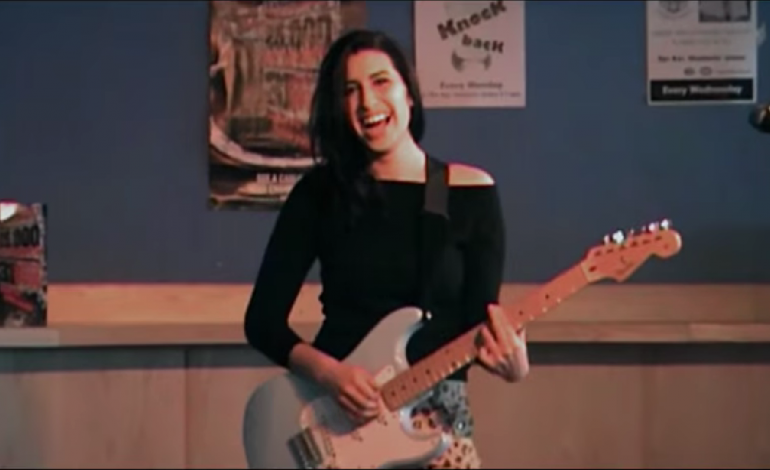
    “Amy” is different from many documentaries in how it presents itself, which was also done in “Senna”. While Kapadia conducted extensive interviews for this film, there is no footage of these conversations. Instead, the audio is used to narrate footage of Amy from concerts, talk shows, tabloid photos, and even home movies. This is the film’s main selling point and biggest strength since it never leaves Amy’s story. We follow her from her first record deal in the early 2000’s to her death in 2011 and we never leave her side. The audience essentially becomes a fly on the wall to her life, seeing every step of her journey. We see her best successes and her worst downfalls, all while her family and friends describe these situations. It’s immersive and puts the viewer directly in the action. This was used in “Senna” with footage from inside the cars, showing the audience just how fast and dangerous these vehicle were. “Amy” uses this to give an intimate portrait of Winehouse and her career.

                
    One aspect of the film that surprise me was how honest it was about everything. While it does have the mindset that this whole thing is a tragedy, it’s not afraid to show or discuss some truly dark parts of Amy’s life. One effective scene is when she goes to an island to rehabilitate and the footage used shows her in a bikini. At this point, she was deep into her drug/alcohol addiction and her bulimic practices, meaning her body is closer to a skeleton than a healthy woman. While attention is never really drawn to it, it’s never hidden. It is simply there to further prove the severity of the situation.
               
   A nice touch the filmmakers added was connected her music to events in Amy’s life. Many times, the film will focus on an issue or situation that had an effect on her, like her different boyfriends or attempts at recovery, and then it’ll show concert footage of a song that relates to said event. While she performs, the lyrics will appear on screen in her handwriting, furthering the connection. There is a section that talks about her first love in her late teens. He was in his early 20’s and she was madly in love with him, at least for a bit. She soon turned on him, wanting him to be a dominant force in her life when instead she had to fill that role. This failed relationship lead to her first single “Stronger Then Me” which makes several, specific references to this person. “You’ve been here seven years longer than me”, “All I need is for my man to live up to his role”, are just a few examples.


                “Amy” is a tragic film, telling the story of Amy Winehouse’s rise to super stardom and how it eventually killed her. As a fan of Winehouse’s music, I was going to like this documentary no matter what, it was a given. What I was not fully expecting was how much I was going to love it. The amount of love, effort, and passion that went into this film is easy to see and is made for fans of Amy and newcomers alike. There were many moments that made me tear up or changed how I look at her music. Yet, the moment that truly got to me was the ending, which legitimately made me cry. “Amy” is now the third movie to ever make me cry. This mixed simply with the quality of the film make it not just one of the best documentaries but also one of the best movies of 2015. If you are a fan of Amy Winehouse, then you’ve probably already seen it. If you are like most and only know “Rehab” then this will be an even better film, since you are seeing it the way the filmmakers intended it, unaware and ready to learn.